

News
Future Trends in Precision Laser Cutting and Micro-Drilling for Advanced Ceramics
As electronic components transition toward higher frequency, higher power density, and continuous miniaturization, advanced ceramic substrates—such as Alumina (AlO3), Aluminum Nitride (AlN), Silicon Nitride (SiN4), and Zirconia (ZrO2)—have become indispensable materials across high-tech manufacturing.
However, advanced ceramics exhibit high brittleness, low thermal conductivity, and extreme mechanical hardness. Traditional mechanical machining methods often suffer from severe tool wear, slow yield rates, and mechanical stress failures. While standard thermal laser processing offered an early alternative, it frequently introduces heat-affected zones (HAZ), micro-cracks, and recast layers that compromise electrical insulation and mechanical strength.
To meet strict structural and performance requirements in modern electronics, precision laser cutting and micro-drilling technologies are rapidly evolving. Below are the key industry trends shaping the future of ceramic laser processing.
1. Transitioning to Ultrafast Lasers (Picosecond & Femtosecond)
The industry is rapidly shifting from conventional long-pulse (CO₂ and nanosecond) lasers toward ultrafast picosecond and femtosecond lasers to achieve true "cold processing."
Minimizing Thermal Impact: Traditional thermal laser cutting transfers heat directly into the ceramic matrix, causing localized thermal stress, edge chipping, and micro-cracking.
Cold Ablation Mechanism: Ultrafast lasers deliver extremely short pulse durations ($<10\text{ ps}$) with ultra-high peak power densities. The energy is delivered faster than the material's heat conduction rate, causing immediate photo-ablation (direct vaporizing) rather than melting.
Superior Quality Metrics: Utilizing UV/Green picosecond and IR/Green femtosecond sources reduces the heat-affected zone (HAZ) to under $5\ \mu\text{m}$, virtually eliminating edge micro-cracks, molten debris, and recast layers.
2. Advanced Beam Shaping and Hybrid Processing Technologies
Precision ceramic processing now relies heavily on advanced beam optics and hybrid processing techniques to overcome taper constraints and improve throughput.
Beam Shaping (DOE & Spatial Light Modulators)
Transforming standard Gaussian laser beams into specialized beam profiles—such as Bessel beams, top-hat profiles, or ring shapes—allows uniform energy distribution through the full depth of the material. This significantly enhances hole side-wall perpendicularity and reduces entry/exit taper.
High-Speed Trepanning and Rotational Drilling
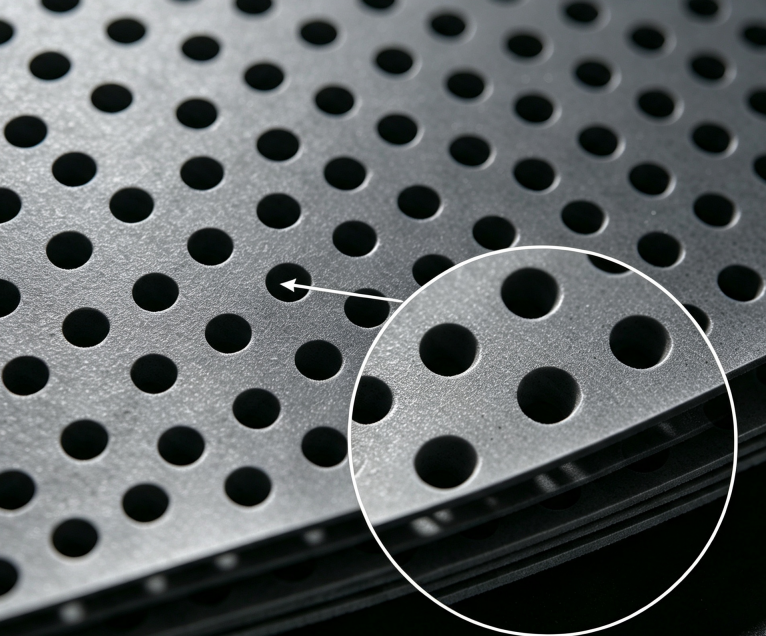
For micro-holes ranging from $30\ \mu\text{m}$ to several hundred micrometers, dynamic trepanning optical heads rotate the beam at high speeds to cut holes layer-by-layer, producing exceptionally smooth sidewalls and high circularity.
Laser MicroJet (Water-Guided Laser) Processing
Water-guided laser technology couples the laser beam into a low-pressure, micro-thin water jet acting as an optical waveguide. The continuous water flow cools the ceramic instantly, flushes out debris, and eliminates focus depth limitations—making it highly effective for thick ceramic cutting without thermal damage.
3. Expanding High-Density Applications in Next-Gen Electronics
Laser micro-machining capabilities directly match the requirements of several fast-growing industrial sectors:
Semiconductor Packaging & Substrates (DBC, AMB, DPC): With the rapid adoption of Silicon Carbide (SiC) and Gallium Nitride (GaN) power devices, demand for Through-Ceramic Vias (TCV) in Direct Plated Copper (DPC) and Active Metal Brazing (AMB) substrates has surged. Precision lasers reliably produce 30-100um vias without structural micro-cracks.
5G/6G RF & Sensing Devices: High-frequency ceramic filters, micro-fluidic channels, and MEMS pressure sensors require complex geometric contours and strict dimension tolerances (≤+3um).
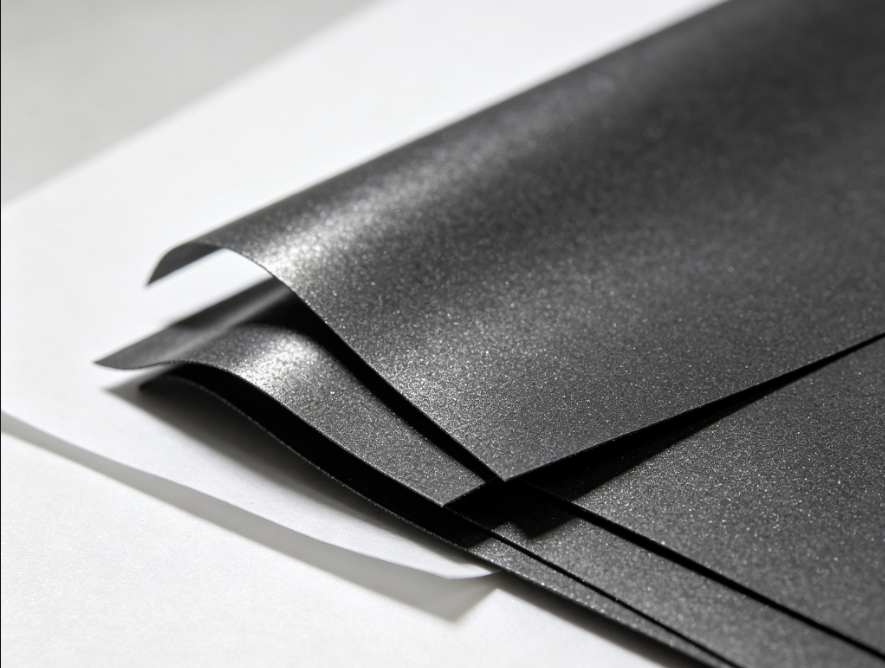
Thin & Multi-Layer Composite Processing: Lasers successfully process ultra-thin ceramic sheets (<0.2mm) and heterogenous stacks (such as copper-ceramic-copper sandwiches) without layer delamination.
4. Integration of Machine Vision, AI, and Automated Workflows
Modern ceramic laser processing systems are evolving from manual setup architectures to fully automated, closed-loop processing cells.
3D Auto-Focus & Vision Alignment: Ceramic substrates often experience slight warping or thickness variations after sintering. Integrated high-resolution CCD cameras and real-time optical displacement sensors dynamically compensate for focal drift across irregular surfaces.
In-Situ Quality Monitoring & AI Optimization: Acoustic and optical spectral sensors monitor drilling breakthroughs and surface defect formations in real time. AI-driven feedback loops dynamically adjust laser power, pulse repetition frequency, and galvo scanning speeds to maintain consistent quality.
High-Throughput Parallel Processing: Dual-head or multi-beam optical setups combined with automated robotic handlers drastically reduce per-part cycle times for high-volume manufacturing lines.
Conclusion
The future of precision ceramic processing hinges on three core pillars: ultrafast short-wavelength lasers for defect-free cold processing, advanced optical beam shaping for geometric accuracy, and AI-driven closed-loop automation for scalable production. As advanced ceramics continue to replace traditional materials in power electronics, aerospace, and medical devices, high-precision ultrafast laser cutting and micro-drilling will remain essential enable technologies for next-generation manufacturing.


-
What are the precautions for operating a laser marking machine?
1. It is strictly prohibited to start the laser power supply and Q-switching power supply when there is no water or the water circulation is abnormal.
2. The Q power supply is not allowed to operate without load (i.e., the output terminal of the Q power supply should be left floating).
3. In case of any abnormal phenomenon, first turn off the galvanometer switch and the key switch, and then conduct a check.
4. It is not allowed to start other components before the krypton lamp is lit to prevent high voltage from entering and damaging the components.
5. Pay attention to leaving the output terminal (anode) of the laser power supply suspended to prevent sparking and breakdown with other electrical appliances.
6. Keep the internal circulating water clean. Regularly clean the water tank and replace it with clean deionized water or pure water.
-
What should we do when laser intensity decreases and the marking is not clear enough?
1. Turn off the machine and check if the laser resonant cavity has changed; Fine-tune the resonant cavity lens. Make the output light spot the best;
2. The acousto-optic crystal is offset or the output energy of the acousto-optic power supply is too low;
Adjust the position of the audio-visual crystal or increase the working current of the audio-visual power supply;
3. The laser entering the galvanometer deviates from the center: Adjust the laser;
4. If the current is adjusted to around 20A but the light sensitivity is still insufficient: the krypton lamp is aging. Replace it with a new one.
-
How to maintain a UV laser cutting machine?
1. It is required to carry out regular cleaning every day, remove debris from the countertop, limiters and guide rails, and spray lubricating oil on the guide rails
2. The waste materials in the collection box should be cleared regularly to prevent excessive waste from blocking the exhaust port.
3. Clean the chiller once every 15 days, drain all the internal water, and then fill it with fresh pure water.
4. The reflector and focusing lens should be wiped with a special cleaning solution every 6 to 8 hours.
When wiping, use a cotton swab or cotton swab dipped in the cleaning solution to wipe from the center to the edge of the focusing lens in a counterclockwise direction.
At the same time, be careful not to scratch the lens.
5. The indoor environment can affect the lifespan of the machine, especially in damp and dusty conditions.
A damp environment is prone to causing rust on the reflective lenses and also easily leading to short circuits, discharge and sparking of the velvet laser.
-
What accidents might be caused by the laser emission when using a laser cutting machine?
(1) A fire was caused by the laser coming into contact with flammable materials.
Everyone knows that the power of laser generators is very high, especially when it comes to high-power laser cutting machines, the temperature of the emitted laser is extremely high. The possibility of a fire being caused when a laser beam comes into contact with flammable objects is very high.
(2) Harmful gases may be produced when the machine is in operation.
For instance, when cutting with oxygen, it undergoes a chemical reaction with the cutting material, generating unknown chemical substances or fine particles and other impurities. After being absorbed by the human body, it may cause allergic reactions or discomfort in the lungs and other respiratory tracts. Protective measures should be taken when conducting work.
(3) Direct laser exposure to the human body can be harmful.
The damage caused by lasers to the human body mainly includes damage to the eyes and skin. Among the harms caused by lasers, the damage to the eyes is the most severe. Moreover, damage to the eyes is permanent. So when doing homework, you must pay attention to protecting your eyes.
-
What is the focused spot diameter of nanosecond, picosecond and femtosecond laser?
Nanosecond: The light spot is 0.5-1mm.
Picosecond: The focused spot is around 0.02mm.
Femtosecond: Under the action of a laser beam with a high repetition rate of 100-200KHz and a very short pulse width of 10ps,
the focused spot diameter is as small as 0.003mm.
-
What are the main applications of UV laser cutting machine?
The UV laser cutting machine can be used for cutting and depaneling PCB.
It can precisely cut and shape various types of PCB circuit boards with V-CUT and stamp holes, and open Windows and covers.
It can also be used for separating packaged circuit boards and ordinary smooth boards.
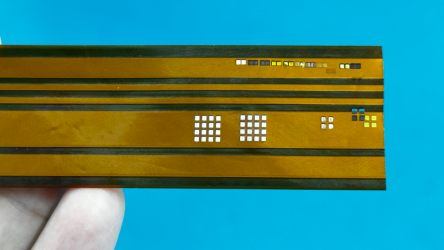
It is suitable for cutting various types of PCB substrates, such as ceramic substrates, rigid-flex boards, FR4, PCBs, FPCs, fingerprint recognition modules, cover films, composite materials, copper substrates, aluminum substrates, etc.
-
Precautions for laser cutting machines to process various metal materials?
Copper and brass:
Both materials have high reflectivity and excellent thermal conductivity.
Brass with a thickness of less than 1mm can be processed by nitrogen laser cutting.
Copper with a thickness of less than 2mm can be cut. The gas used for laser cutting processing must be oxygen.
Copper and brass can only be cut when a "reflective absorption" device is installed on the system. Otherwise, reflection will damage the optical components.
Synthetic materials:
Processable synthetic materials include: thermoplastics, thermosetting materials and artificial rubber.
Aluminum:
Despite its high reflectivity and thermal conductivity, aluminum materials with a thickness of less than 6mm can be cut, depending on the type of alloy and the capacity of the laser.
When cutting with oxygen, the cutting surface is rough and hard.
When nitrogen is used, the cutting surface is smooth.
Pure aluminum is extremely difficult to cut due to its high purity.
Only when a "reflection and absorption" device is installed on the fiber laser cutting machine system can aluminum materials be cut.
Otherwise, reflection will damage the optical components
-
What should be paid attention to when laser cutting stainless steel?
Laser cutting processing of stainless steel requires the use of oxygen, under the condition that edge oxidation is not a concern.
If nitrogen is used to achieve an edge free of oxidation and burrs, no further processing is required.
Coating an oil film on the surface of the sheet will achieve a better perforation effect without reducing the processing quality.