

News
Top 5 Femtosecond Laser Cutting Trends Shaping Precision Manufacturing in 2026
With ultra-short pulse durations at the 10-15-second level and ultra-high peak power, femtosecond lasers have become the gold standard for true "cold processing." By eliminating the heat-affected zone (HAZ) and overcoming the physical limits of traditional mechanical and thermal tools, femtosecond laser cutting is unlocking new possibilities across high-tech industries.
As industrial reliability improves and cost-per-watt decreases, several major trends are driving the next wave of femtosecond laser cutting technology.
1. High Average Power and High Repetition Rates for Mass Production
Historically, the primary bottleneck for femtosecond laser adoption was low throughput. While edge quality was unmatched, low average power made it difficult to meet high-volume manufacturing demands.
The Shift to 100W+ Systems: Industrial femtosecond laser sources are rapidly scaling toward higher average powers (greater than 100W), higher repetition rates (greater than 1 MHz), and tunable pulse widths.
Burst Mode & Speed Gains: Combined with advanced burst-mode processing, manufacturers can now achieve significantly higher material removal rates without sacrificing the zero-HAZ, burr-free finish. As a result, femtosecond systems are increasingly replacing nanosecond and even picosecond lasers on high-speed production lines.
2. Sub-Micron Precision and Complex 3D Micromachining
Precision requirements in consumer electronics, semiconductors, and medical devices continue to shrink from the micron scale down to the nanometer scale.
Advanced Beam Shaping: By pairing nonlinear absorption mechanisms with spatial-temporal beam shaping and top-hat homogenization, femtosecond lasers can now dice ultra-thin glass, semiconductor wafers, and Micro-LED chips with virtually zero micro-cracks or chipping.
Multi-Axis 3D Cutting: Integrated with high-precision multi-axis motion stages and real-time dynamic focus tracking, modern systems are moving beyond flat 2D substrates. They now enable complex 3D curved surface cutting, irregular geometries, and high-aspect-ratio micro-drilling—capabilities essential for minimally invasive medical stents, hypotubes, and aerospace micro-components.
3. Superior Adaptability to Composite and Heterogeneous Materials
Modern engineering relies heavily on multi-layered and brittle advanced materials—such as carbon fiber reinforced polymers (CFRP), ceramic matrix composites (C/SiC), metal-polymer laminates, silicon carbide (SiC), and synthetic diamond.
Traditional mechanical tooling or thermal laser cutting often causes delamination, charring, or structural stress in these materials. Because femtosecond laser ablation relies on nonlinear cold vaporization rather than thermal melting, it delivers clean, stress-free cuts across heterogeneous and hybrid material stacks in a single pass.
4. Turnkey Automation and AI-Driven Process Optimization
Industrial buyers are moving away from purchasing standalone laser sources in favor of complete, turnkey laser micromachining systems.
All-in-One Integration: Modern cutting platforms combine high-precision optical paths, dynamic galvo scanners, automated loading/unloading, and inline optical inspection into a single automated workflow.
AI & Machine Vision: Artificial intelligence and machine vision algorithms are increasingly embedded into control software. These tools automatically optimize cutting trajectories, adaptively regulate laser fluence in real time, and minimize operator intervention—making high-mix, low-volume, and mass-customized precision manufacturing far more scalable.
5. Rapid Expansion into Next-Generation High-Tech Sectors
As femtosecond laser systems cross the industrialization inflection point, they are becoming indispensable across emerging growth markets:
AI Infrastructure & Photonics: The surge in AI data centers has created massive demand for high-speed optical transceivers, photonic integrated circuits (PICs), fiber Bragg gratings, and micro-optical waveguides, where femtosecond direct writing and precision cutting are critical.
New Energy & Advanced Displays: From precision electrode slitting in next-generation EV batteries to damage-free lift-off and dicing of Micro-LED displays, femtosecond lasers provide the high production yields required for commercial scale-up.
Partner with Beyond Laser for High-Precision Micromachining Solutions
Choosing the right ultrafast laser system depends on your specific material properties, tolerance requirements, and production throughput targets. At Beyond Laser, we specialize in designing and manufacturing industrial-grade femtosecond and picosecond laser cutting systems tailored to demanding precision manufacturing applications.
Ready to elevate your production quality and yield?Contact the Beyond Laser engineering team today to discuss your project specifications or submit your materials for free sample cutting tests and a customized process evaluation.
-
 Nov 12, 2026
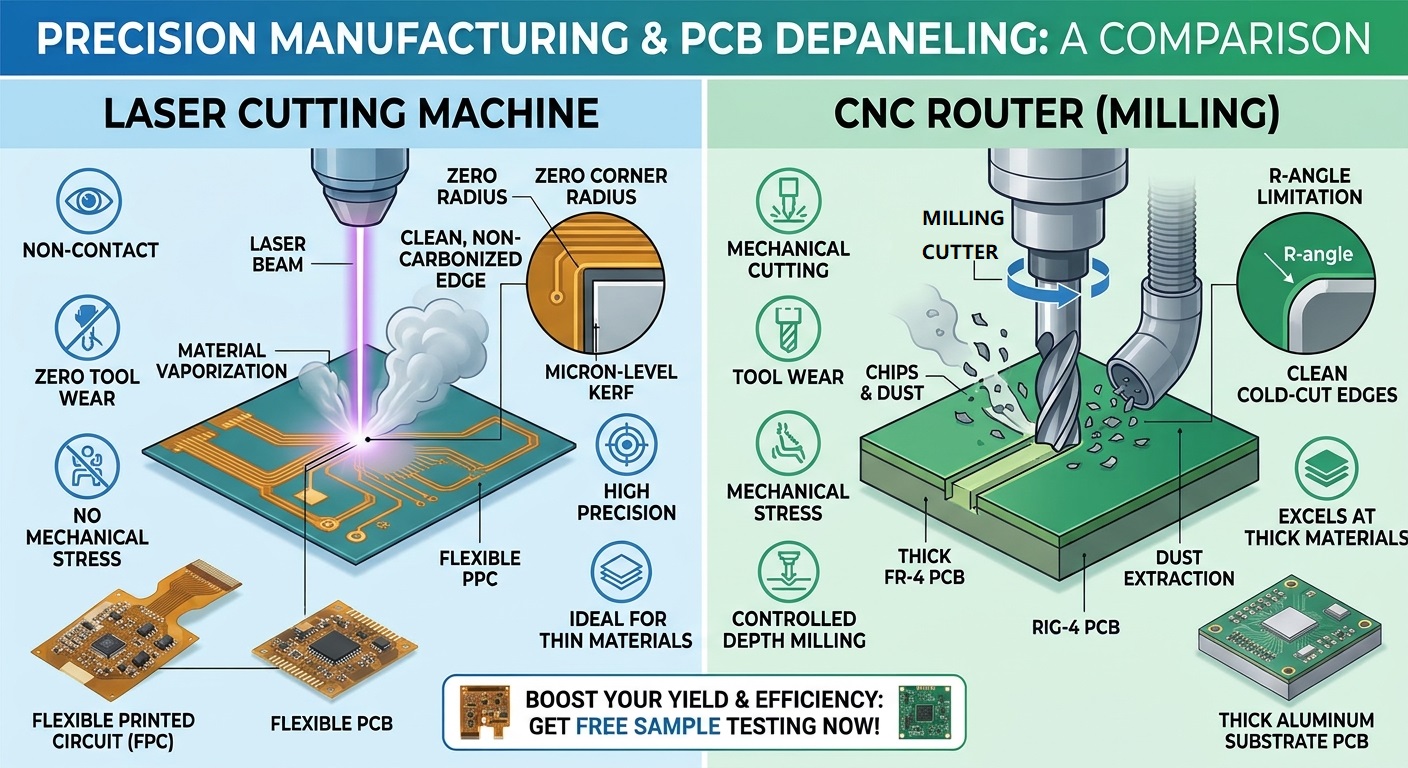
Laser Cutting Machine vs. CNC Router: Which is Better for Precision Manufacturing & PCB Depaneling?
-
 Oct 29, 2026
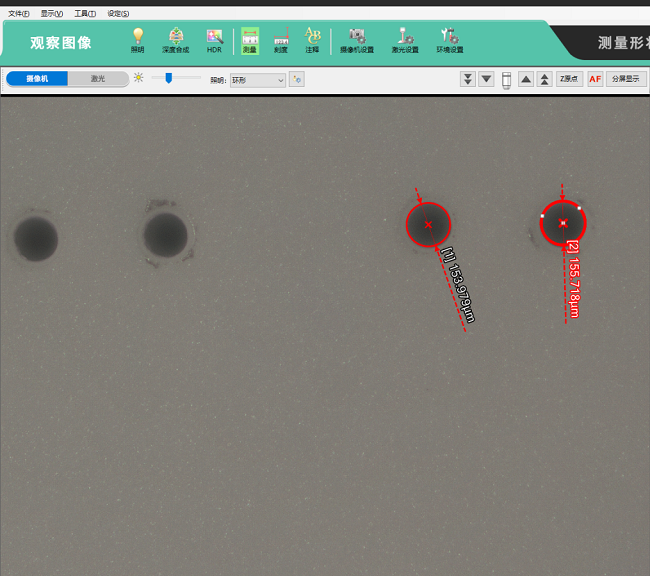
Future Trends in Precision Laser Cutting and Micro-Drilling for Advanced Ceramics
-
 Oct 20, 2026
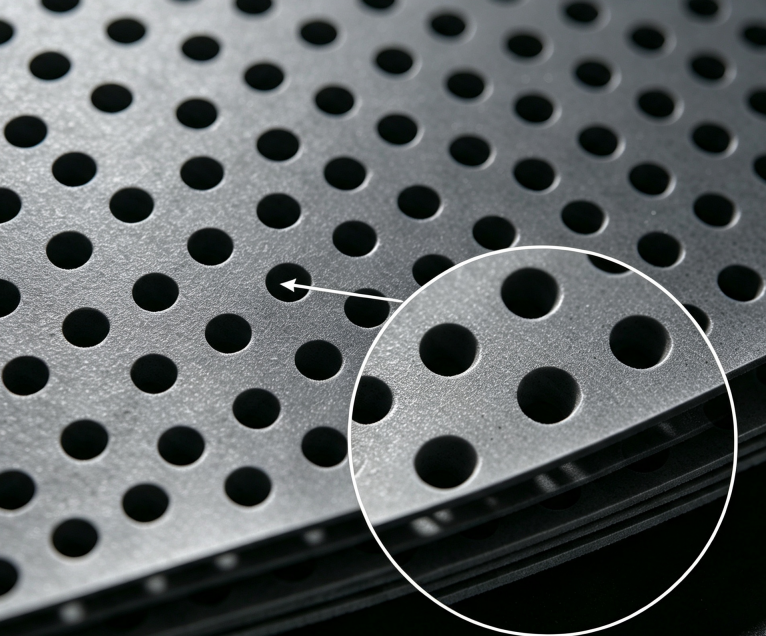
The Future of PCB Microvia Drilling: 2026 Trends Shaping Next-Generation Electronics


-
What are the precautions for operating a laser marking machine?
1. It is strictly prohibited to start the laser power supply and Q-switching power supply when there is no water or the water circulation is abnormal.
2. The Q power supply is not allowed to operate without load (i.e., the output terminal of the Q power supply should be left floating).
3. In case of any abnormal phenomenon, first turn off the galvanometer switch and the key switch, and then conduct a check.
4. It is not allowed to start other components before the krypton lamp is lit to prevent high voltage from entering and damaging the components.
5. Pay attention to leaving the output terminal (anode) of the laser power supply suspended to prevent sparking and breakdown with other electrical appliances.
6. Keep the internal circulating water clean. Regularly clean the water tank and replace it with clean deionized water or pure water.
-
What should we do when laser intensity decreases and the marking is not clear enough?
1. Turn off the machine and check if the laser resonant cavity has changed; Fine-tune the resonant cavity lens. Make the output light spot the best;
2. The acousto-optic crystal is offset or the output energy of the acousto-optic power supply is too low;
Adjust the position of the audio-visual crystal or increase the working current of the audio-visual power supply;
3. The laser entering the galvanometer deviates from the center: Adjust the laser;
4. If the current is adjusted to around 20A but the light sensitivity is still insufficient: the krypton lamp is aging. Replace it with a new one.
-
How to maintain a UV laser cutting machine?
1. It is required to carry out regular cleaning every day, remove debris from the countertop, limiters and guide rails, and spray lubricating oil on the guide rails
2. The waste materials in the collection box should be cleared regularly to prevent excessive waste from blocking the exhaust port.
3. Clean the chiller once every 15 days, drain all the internal water, and then fill it with fresh pure water.
4. The reflector and focusing lens should be wiped with a special cleaning solution every 6 to 8 hours.
When wiping, use a cotton swab or cotton swab dipped in the cleaning solution to wipe from the center to the edge of the focusing lens in a counterclockwise direction.
At the same time, be careful not to scratch the lens.
5. The indoor environment can affect the lifespan of the machine, especially in damp and dusty conditions.
A damp environment is prone to causing rust on the reflective lenses and also easily leading to short circuits, discharge and sparking of the velvet laser.
-
What accidents might be caused by the laser emission when using a laser cutting machine?
(1) A fire was caused by the laser coming into contact with flammable materials.
Everyone knows that the power of laser generators is very high, especially when it comes to high-power laser cutting machines, the temperature of the emitted laser is extremely high. The possibility of a fire being caused when a laser beam comes into contact with flammable objects is very high.
(2) Harmful gases may be produced when the machine is in operation.
For instance, when cutting with oxygen, it undergoes a chemical reaction with the cutting material, generating unknown chemical substances or fine particles and other impurities. After being absorbed by the human body, it may cause allergic reactions or discomfort in the lungs and other respiratory tracts. Protective measures should be taken when conducting work.
(3) Direct laser exposure to the human body can be harmful.
The damage caused by lasers to the human body mainly includes damage to the eyes and skin. Among the harms caused by lasers, the damage to the eyes is the most severe. Moreover, damage to the eyes is permanent. So when doing homework, you must pay attention to protecting your eyes.
-
What is the focused spot diameter of nanosecond, picosecond and femtosecond laser?
Nanosecond: The light spot is 0.5-1mm.
Picosecond: The focused spot is around 0.02mm.
Femtosecond: Under the action of a laser beam with a high repetition rate of 100-200KHz and a very short pulse width of 10ps,
the focused spot diameter is as small as 0.003mm.
-
What are the main applications of UV laser cutting machine?
The UV laser cutting machine can be used for cutting and depaneling PCB.
It can precisely cut and shape various types of PCB circuit boards with V-CUT and stamp holes, and open Windows and covers.
It can also be used for separating packaged circuit boards and ordinary smooth boards.
It is suitable for cutting various types of PCB substrates, such as ceramic substrates, rigid-flex boards, FR4, PCBs, FPCs, fingerprint recognition modules, cover films, composite materials, copper substrates, aluminum substrates, etc.
-
Precautions for laser cutting machines to process various metal materials?
Copper and brass:
Both materials have high reflectivity and excellent thermal conductivity.
Brass with a thickness of less than 1mm can be processed by nitrogen laser cutting.
Copper with a thickness of less than 2mm can be cut. The gas used for laser cutting processing must be oxygen.
Copper and brass can only be cut when a "reflective absorption" device is installed on the system. Otherwise, reflection will damage the optical components.
Synthetic materials:
Processable synthetic materials include: thermoplastics, thermosetting materials and artificial rubber.
Aluminum:
Despite its high reflectivity and thermal conductivity, aluminum materials with a thickness of less than 6mm can be cut, depending on the type of alloy and the capacity of the laser.
When cutting with oxygen, the cutting surface is rough and hard.
When nitrogen is used, the cutting surface is smooth.
Pure aluminum is extremely difficult to cut due to its high purity.
Only when a "reflection and absorption" device is installed on the fiber laser cutting machine system can aluminum materials be cut.
Otherwise, reflection will damage the optical components
-
What should be paid attention to when laser cutting stainless steel?
Laser cutting processing of stainless steel requires the use of oxygen, under the condition that edge oxidation is not a concern.
If nitrogen is used to achieve an edge free of oxidation and burrs, no further processing is required.
Coating an oil film on the surface of the sheet will achieve a better perforation effect without reducing the processing quality.